Window Leak Storm Damage in Hayden Run: Fast Fixes
A storm rolls across Hayden Run, the wind shifts, and suddenly water is running down your window frame, pooling on the sill, and soaking into your drywall and flooring. By the time the rain lets up, you may already see swollen trim, dark streaks on the wall below the window, and a damp smell that was not there an hour ago. Window leaks during severe weather are one of the most underestimated water emergencies we respond to, because the water often travels behind the wall before you ever see it on the surface.
Hayden Run Water Restoration has been handling storm driven water intrusion across Central Indiana since 2018. We are IICRC certified, BBB A+ rated, and we answer the phone at 2 a.m. when the wind is still blowing. The questions below are the exact ones Hayden Run homeowners ask us when they call during or right after a storm. If your situation does not match what we describe, or if we are not the right fit for your specific damage, we will tell you directly. Honest answers cost you nothing, and they almost always save you money on the back end of a claim.
How Storm-Driven Window Leaks Actually Happen
Wind driven rain does not behave like normal rain. It moves sideways at 30 to 60 mph and finds gaps you cannot see from inside.
- Failed exterior caulk around the frame (typical lifespan: 5 to 10 years)
- Cracked or missing head flashing above the window
- Rotted wood sills hiding under paint
- Clogged weep holes on vinyl and aluminum frames
- Hail cracked glazing or compromised seals
- Siding gaps and missing J-channel at the frame edge
- Roof valley runoff dumping water above the window
Most Hayden Run window leaks are not the window. They are the envelope around the window.
Rooms That Suffer the Most
Not every window leak causes equal damage. Location inside the home changes the urgency and the repair scope.
- Bedrooms: Mattresses and box springs wick water fast and rarely dry out fully. Plan on replacement if soaked.
- Living rooms: Hardwood and engineered floors cup within 24 hours. Area rugs trap moisture against the subfloor.
- Kitchens: Cabinet boxes near windows swell at the toe kick. Watch for delaminating particleboard.
- Basements with egress windows: Water pools in the well and pushes through the frame. Check the window well drain first.
- Upstairs bathrooms: Leaks often travel through the floor and show up on the ceiling below, masking the real source.
- Finished attics and dormers: Sloped ceilings hide moisture behind drywall for weeks.
Prevention Before the Next Hayden Run Storm
- Recaulk exterior window perimeters every 5 years
- Check weep holes each spring with a toothpick
- Inspect head flashing after any hailstorm
- Trim trees that drip directly onto window tops
- Replace cracked glazing on older wood windows
- Add gutter extensions where downspouts dump near windows
- Schedule a yearly envelope check, especially on west and south facing walls
- Install storm shutters or impact film on exposed elevations
- Keep a basic leak kit on hand: tarp, towels, plastic sheeting, painter's tape, and a shop vac
Indiana storms are not slowing down. The houses that stay dry are the ones with maintained seals and homeowners who act fast when water shows up. If a storm just rolled through Hayden Run and you spot any of the warning signs above, call Hayden Run Water Restoration before the 72 hour mold clock runs out.
IICRC Water Categories for Window Leaks
Knowing the category drives the cleanup scope and the insurance conversation.
- Category 1 (clean): Fresh rainwater straight through a failed seal. Most storm window leaks start here.
- Category 2 (grey): Rainwater that has sat 24 to 48 hours, or water that passed through insulation and drywall.
- Category 3 (black): Water mixed with sewage, roof debris, bird droppings in soffits, or standing water older than 72 hours.
Category jumps fast in Hayden Run during summer storms when indoor temps stay above 70. A Category 1 leak on Friday is often Category 2 by Monday.
When Window Leaks Hide Bigger Problems
A window leak can be the symptom, not the cause. Water above the window often means roof or flashing failure. We frequently find that what looked like a window issue was actually attic water damage from a roof leak tracking down the wall cavity. A free inspection will tell you which one you are dealing with.
Signs the Damage Is Worse Than It Looks
- Bubbling or peeling paint 12+ inches from the window
- Soft or spongy drywall when you press it
- A musty smell within 48 hours
- Warped baseboards or buckling hardwood
- Dark rings on the ceiling below an upstairs window
- Visible staining on insulation when you remove an outlet cover
- Moisture readings above 16% on wood framing
- Condensation forming inside double pane glass after the storm
- Nail pops appearing on drywall near the window frame
If you see two or more of these, the water traveled. A surface wipe down will not fix it. Hidden moisture is exactly why checking for water damage behind walls matters before you patch and paint.
Get a straight answer before the damage spreads
Storms in Hayden Run do not wait for business hours, and neither do we. If your window is leaking right now, or if you suspect water made it into the wall during a recent storm, call Hayden Run Water Restoration for a free on site assessment. We will tell you what we find, what your insurance is likely to cover, and whether the job needs us at all. That is the standard we have held since 2018, and it is why our neighbors keep our number saved.
What Professional Mitigation Looks Like
- Moisture mapping with pin and pinless meters
- Thermal imaging to find wet cavities you cannot see
- Controlled demo of saturated drywall and insulation
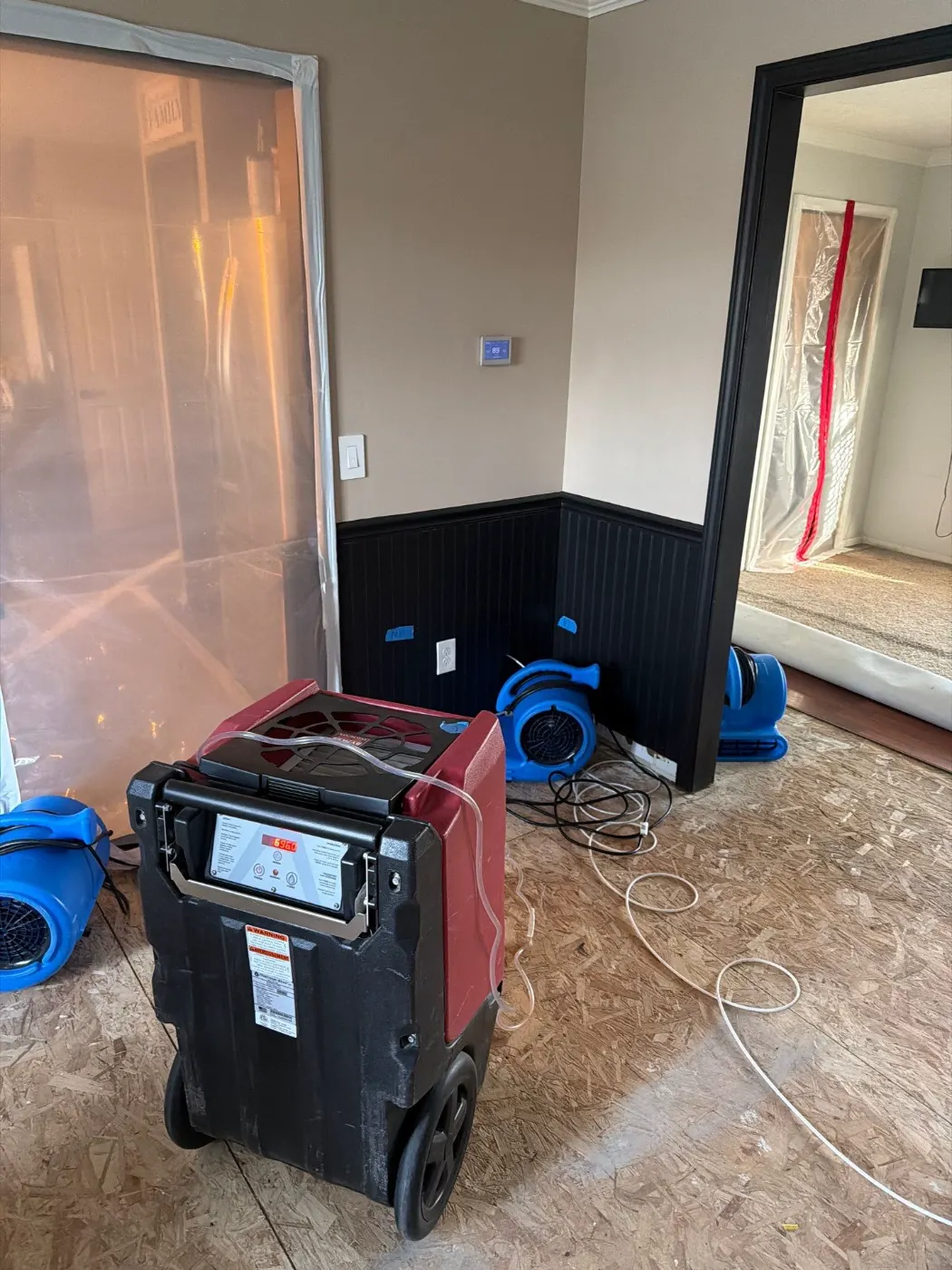
- Air movers and commercial dehumidifiers, typically 3 to 5 days
- Daily moisture readings logged for your insurance file
- Antimicrobial application on framing before reconstruction
- Coordination with your roofer or window installer for the source fix
- Containment barriers to keep dust and spores out of unaffected rooms
- HEPA air scrubbers when mold is suspected or confirmed
For storm related claims, our full storm damage restoration service in Hayden Run covers everything from the initial tarp to final reconstruction.
Mistakes That Make the Damage Worse
We see the same handful of errors on nearly every delayed callout. Avoid these and you save thousands.
- Painting over a stain before the cavity is dry
- Running the HVAC on full blast, which spreads spores room to room
- Replacing drywall without checking the framing moisture content
- Ignoring the smell because the visible wet spot dried
- Using a household fan instead of a commercial air mover
- Caulking over rotted wood instead of cutting it out
- Waiting for the next storm to "see if it leaks again" before filing
7 Steps to Take in the First 60 Minutes
- Kill power to the affected room at the breaker if water is near outlets or fixtures.
- Photograph everything before you move a single item. Wide shots and close ups. Timestamp matters for insurance.
- Move furniture, rugs, and electronics at least 6 feet from the window.
- Catch active drips with buckets, towels, or a wet/dry shop vac.
- Pull back wet carpet from the tack strip if you can. Trapped pad holds water for days.
- Open the window trim only if you are comfortable. Otherwise leave it for the pros to map moisture.
- Call a restoration company if water touched drywall, insulation, or flooring. Call Hayden Run Water Restoration for a free moisture inspection in Hayden Run.
Typical Costs in Hayden Run
- Minor leak, surface only: $300 to $750 for drying and inspection
- Single window with drywall replacement: $800 to $2,200
- Multi room intrusion with insulation removal: $2,500 to $6,500
- Hardwood floor restoration or replacement near window: add $1,200 to $4,000
- Mold remediation if delayed past 72 hours: add $1,500 to $5,000
- Exterior flashing and caulk repair at the source: $250 to $900 per window
- Full window replacement if the frame is rotted: $600 to $1,800 per opening
Most homeowners pay only their deductible when the source is a covered storm event. Sudden wind driven rain is usually covered. Long term seepage is usually not.
Insurance Claim Tips That Actually Work
- Report within 24 to 72 hours of the storm
- Use the words "wind driven rain" and "sudden and accidental" in your claim notes
- Save weather reports for your zip code on the date of loss
- Keep every receipt, including fans, tarps, and hotel stays if displaced
- Do not throw away damaged materials until the adjuster sees them or you have photos plus moisture readings
- Ask for the IICRC drying log from your restoration contractor
- Request a copy of the adjuster's scope of loss in writing
- Get a second opinion if the initial estimate seems low
Frequently Asked Questions
Will my homeowners insurance cover storm-driven window leaks in Hayden Run?
Sudden storm events are usually covered, especially when wind-driven rain breaches a previously sound window. Gradual leaks blamed on deferred maintenance often are not. Hayden Run Water Restoration provides the documentation package most Hayden Run adjusters require, including moisture readings and timestamped photos, which gives your claim the best chance of approval.
How fast can Hayden Run Water Restoration get to my home during an active storm?
Our average response time across Hayden Run during active weather is 45 to 90 minutes. We stage trucks during forecasted severe storms so we can move quickly, and we will walk you through emergency containment steps over the phone while we are en route.
Can I just dry the window area myself with fans?
You can dry surface moisture, but household fans do not remove humidity from inside the wall cavity. Trapped moisture behind drywall typically grows mold within 48 to 72 hours. If the leak was small and you caught it during the storm, self-drying may be enough. If drywall feels soft or paint is bubbling, call us.
How long does drying take after a window leak?
Most single-window jobs in Hayden Run dry in 3 to 5 days with proper equipment. Larger intrusions or jobs involving hardwood floors can run 5 to 7 days. We monitor moisture readings daily and pull equipment as soon as materials hit dry standard, not on a fixed schedule.
What if mold is already growing around my window?
If you see visible mold or smell a musty odor, we contain the area before any demolition to prevent spores from spreading. Small surface mold under 10 square feet often falls inside a standard restoration scope. Larger growth triggers a separate remediation protocol, and Hayden Run Water Restoration will explain the difference and pricing before any work begins.
Have a restoration question?
Our IICRC certified Hayden Run crew is ready to help. Free assessments, estimate based on what we can sees, no pressure.